April 20, 2026
What New Yoga Teachers Get Wrong (And How to Grow Past It)
Every yoga teacher looks back on their early classes and winces a little. The borrowed phrases, the over-corrected alignment, the voice that sounded nothing like them. It is part of the process, but understanding what tends to go wrong early on, and why, makes it easier to move through it.
This blog, and our podcast on the topic, covers the most common missteps new yoga teachers make, and what to do instead.
Finding Your Voice as a Yoga Teacher
It takes time to find your voice as a teacher, both literally and figuratively.
One of the most common things new yoga teachers do without realizing it is adopt a vocal persona: softer, slower, more melodic than how they actually speak. It feels professional. It feels like what a yoga teacher is supposed to sound like. The problem is that it often doesn't sound like you, and students feel that distance even when they can't name it.
This isn't unique to yoga. It happens in customer service, podcasting, and any role where people feel pressure to perform a version of professionalism. The instinct makes sense, but teaching in a voice that isn't yours pulls you away from the thing that actually builds trust with students: your real presence.
Finding your teaching voice doesn't mean abandoning professionalism. It means bringing your actual self into the room.
A practical starting point: Record yourself teaching. Notice where your voice shifts into a register that doesn't feel like you, and bring it back.
explore heart and bones teacher training
An 8-month online certification with Heart and Bones Yoga that blends anatomy-informed movement, inclusive teaching, and the essence of yoga.

The Pinterest-Quote Trap
Most yoga teachers have said something in class that sounded profound in the moment and fell apart under closer examination. Often these phrases come directly from a teacher or training, passed down without much questioning. Sometimes they are genuinely wise. Sometimes they are catchy in a way that substitutes for actual nuance.
A good example: "The poses you don't like are the poses you need." It sounds true. It has been said in yoga classes for decades. But it is also a blanket statement that overrides a student's bodily instincts without any real basis for doing so. It doesn't ask why someone dislikes a pose. It doesn't distinguish between discomfort that is productive and discomfort that is a signal to stop.
Nuance is less quotable than a one-liner, but it is what good teaching is actually made of.
As you develop as a teacher, it is worth auditing the phrases you have inherited. Ask yourself why you say them, and whether they hold up when you look closely.
The Problem with Over-Cueing
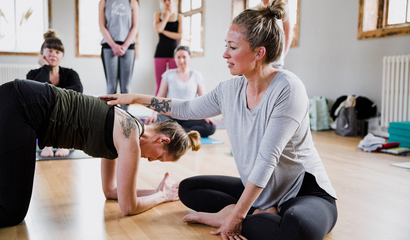
New teachers often cue too much. It comes from a genuine desire to help students get things right, but it can work against the core purpose of yoga: developing body awareness.
When every breath is directed, every alignment point narrated, and every deviation corrected, students stop building their own sense of what is happening in their bodies. They outsource the listening to the teacher instead of developing it themselves.
This becomes especially relevant with students who are hypermobile. Their proprioceptive experience is different from what standard cues assume, and asking them to find a sensation that their nervous system doesn't register in the expected way can cause confusion or harm, even with the best intentions.
Action cues tend to serve students better than alignment directives. "Press your feet into the floor" gives someone something to do. "Your knees should be over your ankles" gives them something to worry about. The first builds engagement. The second builds self-consciousness.
Using Your Training as a Starting Point, Not a Ceiling
After completing yoga teacher training, it is normal to lean heavily on the framework you were given: the sequencing structure, the language, the cues. That framework is genuinely useful. It is a foundation that lets you teach while you are still building confidence.
The issue is when the framework becomes the permanent script rather than a starting point.
Working with tried and tested sequences and cues early on is a smart approach. It frees up mental bandwidth to pay attention to what is actually happening in the room, which is where real teaching skill develops. Over time, that attention becomes the basis for a more responsive, more personal style.
The goal is to use the framework long enough that you stop needing it.

How to Handle Feedback Without Losing Yourself
Feedback is inevitable. Some of it will be genuinely useful. Some of it will reflect a student's bad day, a mismatch in expectations, or a preference that has nothing to do with the quality of your teaching. Learning to tell the difference is one of the harder parts of becoming a yoga teacher.
A few things that help:
Implement changes in small increments. You don't have to overhaul everything in response to one piece of feedback. Small adjustments over time are more sustainable and easier to assess.
Distinguish between useful feedback and personal preference. Someone feeling unsafe in class is different from someone who didn't like your music. Both are worth knowing, but they don't carry the same weight.
Know your why as a teacher. This is the most practical tool for evaluating feedback clearly. When you know why you teach the way you teach, you can assess what to take on board and what to set aside, without reacting defensively or changing everything indiscriminately.
Give people grace. You rarely know what someone is carrying when they walk into class. Feedback that feels sharp may have very little to do with you.
Growth Takes Time, and That's Normal
Finding your footing as a yoga teacher is a long game. The teachers who grow into confident, responsive, authentic practitioners are usually the ones willing to sit with the uncomfortable parts of the process: realizing a cue they've used for years doesn't hold up, receiving feedback that stings, not yet knowing who they are as a teacher.
That discomfort is not a sign something has gone wrong. It is the work.
The good news is that every class you teach builds something, even when it doesn't feel that way. Consistency, self-reflection, and a willingness to keep questioning are what move you forward.
Frequently Asked Questions
What do new yoga teachers struggle with most? The most common challenges are finding an authentic teaching voice, over-relying on scripted cues from training, repeating inherited phrases without examining them, and learning how to process student feedback. These are a normal part of early teaching, not signs that someone isn't suited for it.
How long does it take to find your voice as a yoga teacher? Most experienced teachers describe it as a gradual process that unfolds over years rather than months. Using established sequences and frameworks early on is useful. The key is letting those become a foundation to build from rather than a permanent script. Consistent teaching, honest self-reflection, and openness to feedback all accelerate the process.
What is the difference between a good yoga cue and one that doesn't serve students? Useful cues invite the student to feel or do something specific. Less useful cues tell the student where they should be or how they should look. Action-based cues support body awareness and autonomy. Directive alignment cues can create anxiety and pull attention away from sensation.
Is yoga teacher training worth it if you are not sure you want to teach? Many people pursue yoga teacher training to deepen their own practice rather than to teach professionally. The training builds body awareness, anatomy knowledge, and a more nuanced understanding of movement that benefits any practitioner. If teaching is the goal, choosing a training that helps you develop your own why as a teacher tends to produce more adaptable, confident teachers over time.
How should new yoga teachers handle negative student feedback? Sit with it before reacting. Assess whether it reflects something genuinely worth changing or whether it reflects a mismatch between what you offer and what that student was looking for. Knowing your why gives you a through line for making that distinction honestly, without either dismissing the feedback or overhauling everything in response to it.