June 10, 2026
Savasana (Corpse Pose): What It Is, Why It Works, and Why You Keep Skipping It
What Is Savasana? (And How Do You Say It)
Savasana (pronounced sah-VAH-sah-nah, also spelled shavasana) is a yoga pose practiced in stillness and complete rest. The name comes from Sanskrit: sava means corpse, and asana means pose. Corpse Pose.
That name is not meant to be morbid, but rather literal. In savasana, you lie on your back, let your arms fall away from your body, close your eyes, and release all muscular effort. The body becomes still. The breath settles. The work stops.
It is typically practiced at the end of a yoga class, though it can appear at other points in a sequence when deep rest or integration is needed.
If you have ever wondered whether you are saying it correctly—both spellings are widely used, and both pronunciations you have heard are likely right. Savasana and shavasana refer to the same pose. The variation comes from different transliteration systems for Sanskrit. Either is acceptable.
Savasana Is Not the Cool-Down. It's the Practice.
There is a tendency—especially among people who like to move, achieve, and check things off—to treat savasana as the moment the class is technically over. You stayed for the hard parts. You showed up. Now you are just waiting for the teacher wrap up class.
This is a very understandable way to experience it. It is also a missed opportunity.
In yoga, the physical postures are only part of what is happening. Every time you move through a sequence, your body is doing more than building strength or flexibility. It is processing. Your nervous system is responding to effort, breath, and attention. Your muscles are adapting. Your mind is shifting. Savasana is the pause that allows all of that to actually land.
Think of it like sleep after learning something new. The consolidation does not happen during the studying—it happens in the rest that follows. Savasana works the same way. The practice does not finish when the movement stops. In many ways, it finishes in the stillness.
This is why experienced teachers will tell you that savasana is not optional, and not an afterthought. It is built into the structure of a yoga practice because the rest is part of the work. Skipping it is a little like baking a cake and pulling it out of the oven five minutes early. The ingredients were all there. The effort was real. But the integration did not finish.
Rest is not the reward for doing the practice. It is part of the practice itself.
What Happens in Your Body During Savasana
Savasana is not doing nothing. From a physiological standpoint, quite a lot is happening, and understanding it makes the case for staying better than any instruction ever could.
During a yoga practice, your body is operating under sympathetic nervous system activation. This is the branch of your autonomic nervous system responsible for mobilizing energy: increased heart rate, elevated cortisol, heightened alertness. This is not a bad thing. It is exactly what allows you to move, focus, and work hard.
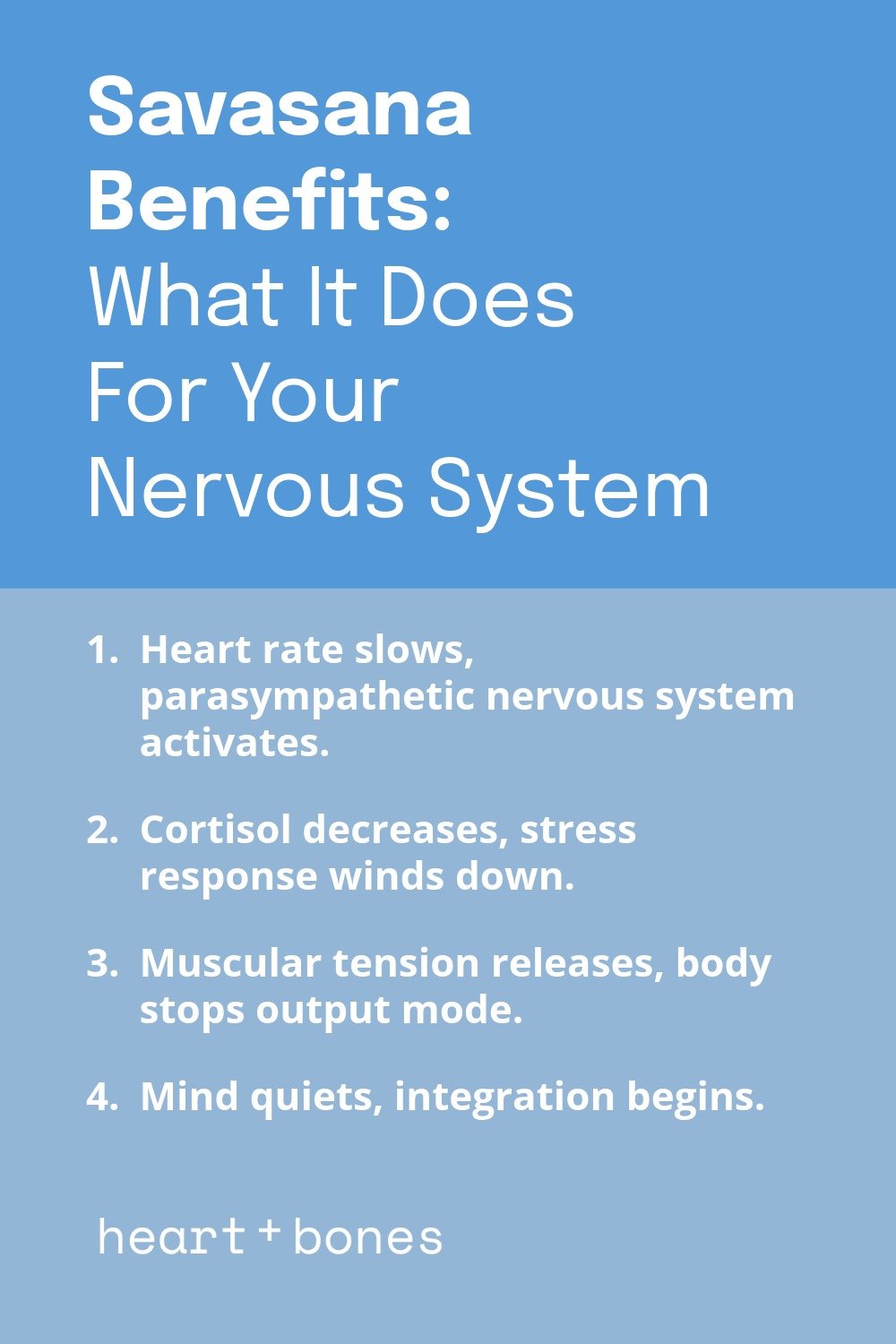
Savasana initiates the shift in the other direction. When you lie still, soften your breath, and release muscular effort, your parasympathetic nervous system takes over. This is the rest-and-digest state. Heart rate slows. Blood pressure drops. Cortisol levels begin to decrease. The body moves out of output mode and into recovery mode.
This shift is not just about feeling relaxed. The parasympathetic shift creates the conditions your body needs to begin recovering: reduced cortisol, decreased muscular tension, a nervous system no longer in output mode.
Tension that was held, sometimes without you even noticing, gets a chance to release.
There is also a meaningful effect on the mind. The mental quieting that savasana invites is not passive. It is an active transition out of doing and into simply being. For many people, this is the hardest part of a yoga practice—and also the most restorative.
The traditional yoga texts described savasana as essential for relieving fatigue and calming the mind. Modern physiology agrees.
Why Lying Still Feels So Hard
If you have ever found yourself mentally redecorating your living room during savasana, you are not doing it wrong.
For many people, stillness is genuinely more challenging than the physical practice that preceded it. The movement gives your mind something to follow—a cue, a breath, a transition. When the movement stops, the mind does not automatically stop with it. It keeps going. It plans, lists, replays, anticipates, and occasionally decides that right now is the perfect time to remember something you forgot to do last Tuesday.
This is not a failure of focus. It is a very normal response to stillness in a culture that treats constant activity as a virtue.
Many of us have spent years, sometimes decades, equating productivity with worth. Stopping feels uncomfortable not because something is wrong, but because we have been conditioned to keep going. Savasana puts you in direct contact with that pattern. The restlessness, the impatience, the urge to roll up your mat and get on with your day—all of it is information.
You do not need to fix any of it. You just need to notice it.
That is, in fact, one of the subtle skills that a consistent yoga practice develops. The ability to be with what is present without immediately needing to change it. Savasana is where that skill gets its most direct workout.
So if stillness feels hard, that is not a sign that savasana is not working. It may be a sign that it is working exactly as intended.
How Long Should Savasana Be?
There is no universal rule, and anyone who gives you a rigid formula is probably guessing.
In a studio setting, ten minutes is a reasonable target. It gives the nervous system enough time to genuinely downshift rather than just pause. Experienced teachers will also tell you that the right length is partly a feel, you can sense when a room is ready to come back, and when people need more time. Savasana is not a fixed box to fill. It is a response to what the practice asked of the body that day.
At home, ten minutes can feel like a long time when the to-do list is right there and the phone is within reach. If open-ended stillness is hard to commit to, try setting a timer before you lie down. Even three or four minutes with a defined endpoint is easier to stay for than stillness with no container, and it is meaningfully better than skipping it entirely.
There is no version of savasana that is too short to matter. There is only the version you actually stay for.
How to Do Savasana, Including Modifications for Every Body
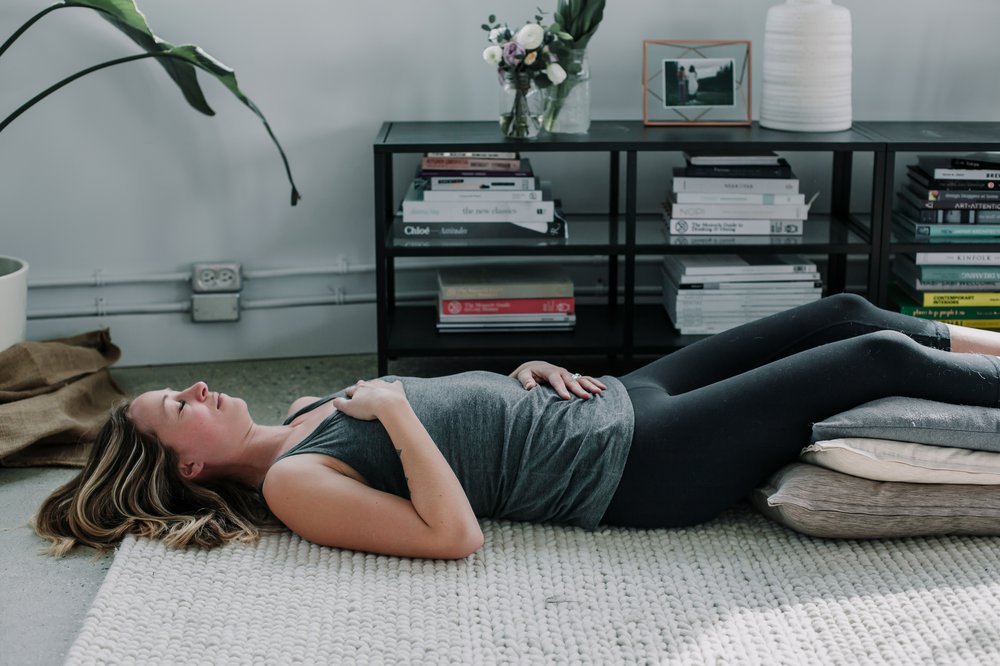
The basic setup is simple. Lie on your back, let your legs fall open naturally, and allow your arms to rest a few inches away from your sides with your palms facing up. Close your eyes. Let your breath return to its natural rhythm. Stay.
That is the pose. But simple does not always mean comfortable, and comfortable is what allows you to actually rest rather than spend the whole time managing discomfort. If something feels off, that is not a signal to push through — it is a signal to adjust. Savasana is one of the few poses in yoga where fidgeting in service of genuine comfort is completely encouraged.
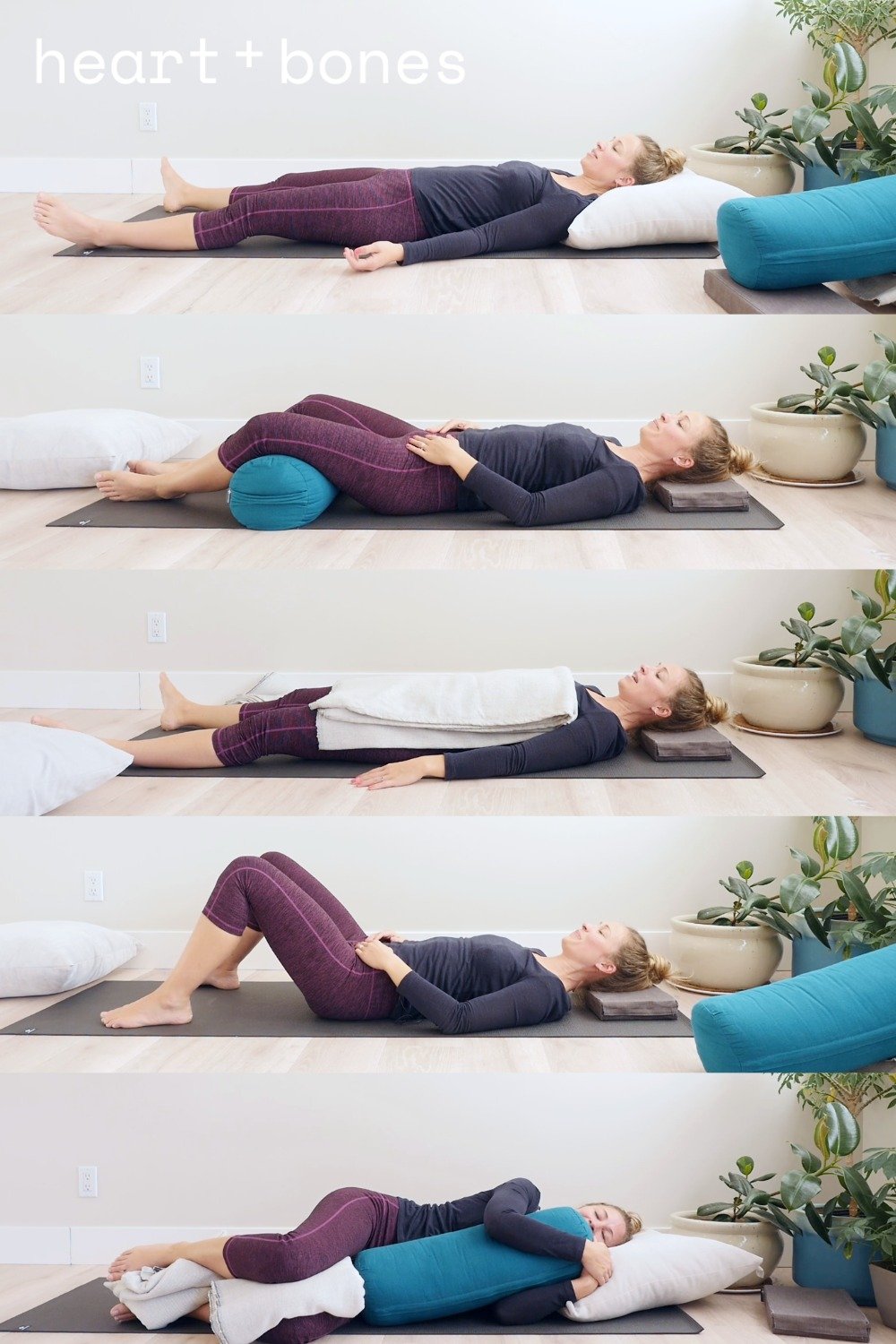
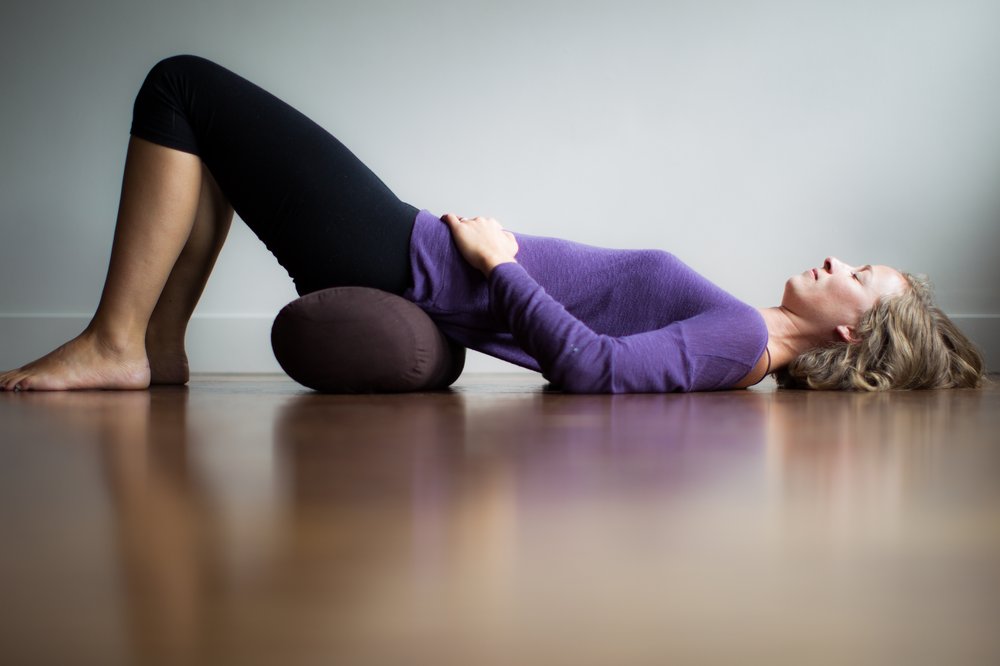
If your lower back is uncomfortable This is the most common obstacle in savasana. Place a bolster, rolled blanket, or pillow under your knees. This reduces the pull on the lumbar spine and allows the lower back to release toward the floor rather than arching away from it. For many people this single adjustment changes everything.
If lying flat does not work for your body Savasana does not have to be on the floor. If you are pregnant, have acid reflux, experience discomfort lying flat, or find the ground inaccessible, a fully supported reclined position—a bolster or folded blankets running the length of your spine—is a completely valid alternative. The goal is supported stillness. The surface and angle are secondary.
If your neck or head needs support A thin folded blanket or small pillow under the head is always appropriate. Your neck should feel long and easy, not compressed or strained. If your chin is jutting upward, add a little more height under your head.
If your mind needs an anchor Some people find open-ended stillness harder to settle into than stillness with a light focal point. A slow count of the breath, a quiet awareness of where the body makes contact with the floor, or simply noticing the natural rise and fall of the chest can give the mind just enough to hold onto without pulling you out of rest.
There is no correct version of savasana that looks the same in every body. The pose is not the shape, it is the quality of rest you find inside it. If you need to adjust, adjust. If you need props, use them. Getting comfortable is not cheating. It is the whole point.
FAQ
What is the difference between savasana and shavasana? They are the same pose. Both spellings refer to Corpse Pose, the resting posture practiced at the end of a yoga class. The variation comes from different systems of transliterating Sanskrit into English. Either spelling is correct.
Is savasana actually necessary? Yes! And not just as a formality. Savasana is when your nervous system shifts from sympathetic activation (the state that powers your movement practice) into parasympathetic recovery. Skipping it cuts short the integration that makes the rest of your practice more effective.
What if I fall asleep in savasana? It happens, and it is not a problem. If you fall asleep, your body likely needed the rest. Savasana is not nap time by design, but if the stillness pulls you under, that is useful information about where your body is at, not a failure of the practice.
Why does my lower back hurt in savasana? Lying flat on the floor can create tension in the lumbar spine, especially if your lower back has a pronounced natural curve. Placing a bolster, rolled blanket, or pillow under your knees is usually enough to resolve this. You should not have to endure discomfort to rest.
Can I do savasana if I can't lie flat on my back? Yes. A fully supported reclined position, bolsters or folded blankets running the length of the spine, works just as well. Savasana is about supported stillness, not a specific shape. Adjust for your body without apology.
How do you pronounce savasana? Savasana is pronounced sah-VAH-sah-nah. Four syllables, with the emphasis on the second. Both savasana and shavasana are commonly used and widely understood.
Is savasana a form of meditation? It shares qualities with meditation—stillness, breath awareness, a quieting of the mind—but it is not the same thing. Savasana is a yoga pose with a specific physiological purpose. Meditation is a dedicated practice of training attention. They complement each other, but savasana alone is not a substitute for a meditation practice.
Do I need yoga props for savasana?
Not at all. Anything soft and supportive works. Pillows under your knees does the same job as bolster for your lower back. A folded blanket under your head works just as well as a yoga block with a blanket draped over it. A rolled towel, a couch cushion, a folded hoodie—all fair game. If you practice at home, look around before you assume you don't have what you need. The goal is comfort, not equipment. Use what you have.